

Our Story From The Roadside
In 2021, three of our visual storytelling team members set out to create a documentary short to highlight the plight of critically endangered Red Wolves, a species that faced devastating loss to vehicle strike mortalities in their severely fragmented habitats within Eastern North Carolina. As filming began on the documentary, Right of Passage, Wildlands Network, a conservation organization, embarked on an important and unique study to create a map of the highway hotspots in need of wildlife crossings statewide in North Carolina. The Wildlands Network team created a list of 179 priority sites across our beautiful state that met the criteria researchers established that pointed to areas in need of wildlife crossings. After compiling this extensive list, the team consulted with over 40 wildlife biologists, scientists, and researchers to vote in identifying the top 20 highway hotspots in critical need of wildlife crossings. This timely report coincided with the Infrastructure Investment and Jobs Act passed in 2021, which included a $350 million allocation for wildlife crossings and other infrastructure projects across the United States. Grant monies from this fund would be made possible through approved federal grant applications.

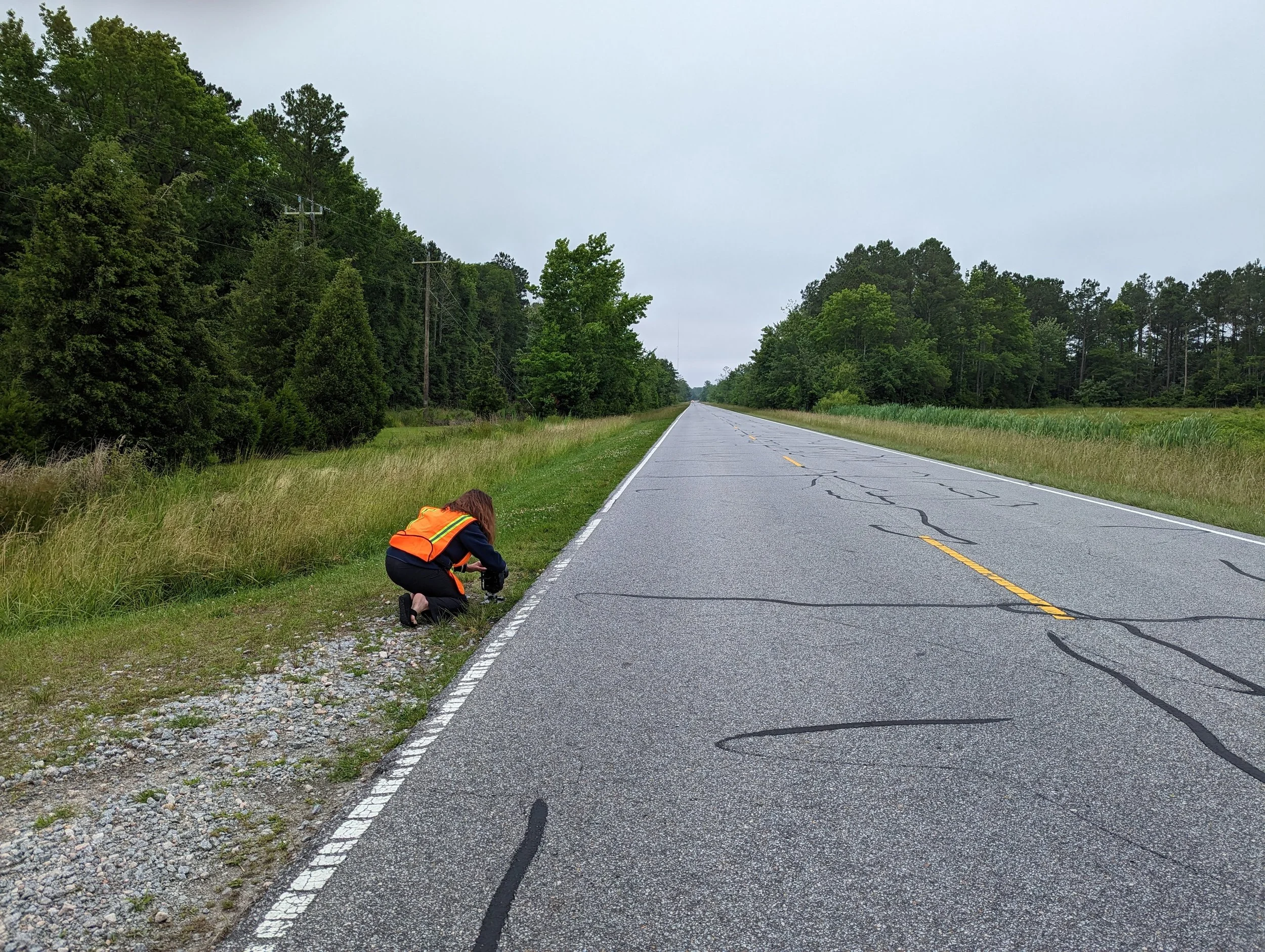
Upon hearing about this study and the potential to bring much needed funding to North Carolina, our storytelling team members formed a unique collaboration with Wildlands Network by creating a powerful storytelling film that they could share with their partners and other stakeholders in order to positively impact the federal grant application process. The primary storytelling goal was to show decision makers what these vital habitats looked like from the perspective of wildlife trying to cross roadways. The film brought into focus the beauty of these habitats that were fragmented by roadways, showed the wildlife that call these habitats home, and brought into focus the severe fragmentation impacting the landscape from an aerial perspective. With drones, ground and tripod camera set-ups, trail cams, and a Go Pro, our storytelling members ventured out to film every one of the top 20 highway hotspots identified by Wildlands Network as needing wildlife crossings. Many challenges were faced along the way, with difficult terrain, severe weather, distracted drivers, and even the occasional technical difficulty but nothing prepared these storytellers for the amount of deceased wildlife that would be observed along the roadways. To be on the front lines in this way further strengthened the resolve for this momentum to one day become part of the change North Carolina needs.

After several weeks of filming at all 20 locations, the editing work began. It was determined that the ideal length of each clip was 30 seconds. In those 30 seconds, the story needed to told surrounding each location and the challenges fragmentation posed to the wildlife living there. Because wildlife casualties should never be just a statistic, storytelling members carefully curated each photo taken from the wild to represent the inherent value of each animal’s life. Each clip offered compelling imagery in a way that would reach the heart of the public and in the end, the film became a part of spurring decision makers to see wildlife and habitats as worth protecting.
After the completion of the above work, in partnership with Wildlands Network, we joined forcers to co-lead a statewide team of NGOs, government agencies, and conservationists in order to facilitate a statewide movement that would serve to increase momentum and visibility for connectivity projects in North Carolina. This was the moment the North Carolina Wildlife Corridor initiative was born. Our hope is that this website becomes a place where a statewide community of individuals, conservation organizations, and agencies work together to share knowledge, inspiration, and timely resources. After years in the making, we are honored to bring this working website to the public and through the momentum it brings to connectivity statewide, we hope that you find this site useful to learn, engage, and find ways to become involved in order to create a safer and more connected North Carolina in the future!
Sincerely,
NCWC Storytellers
