

The North Carolina Coastal Land Trust
The Coastal Land Trust (CLT) has over 30 years of experience working to protect and conserve lands within North Carolina’s Coastal Plain. From this experience, what are some of the types of land you protect today and how do you prioritize which lands to protect?
NCCLT uses two primary tools for prioritizing conservation projects including (1) our board-approved “Project Selection Criteria” document, and (2) our “Top 40” list of priority lands across the region. The Project Selection Criteria document exists as our “reactive” tool and includes a list of organization priorities including priority waterways, ecologically significant habitat, landscape position (i.e. identified corridors, military benefit, adjacent to existing conservation lands, etc.), historic or cultural significance, opportunities for partnerships, and working lands. This document also addresses a list of factors that may preclude NCCLT involvement in a conservation opportunity. For frame of reference, this is the document we reference when seeking approval from our Board of Directors to pursue any conservation acquisition. On the other hand, the “Top 40” list exists as our “proactive” prioritization tool – I’ll address this further in the question below.
Speaking of land prioritization, your organization has identified and created a list of the “Top 40” most endangered lands that need protection. Can you walk us through how these lands were identified and how many lands from the list have been preserved through CLT?
As mentioned above, the “Top 40” list exists as our “proactive” prioritization tool by providing a ranked list of the highest priority lands within our region (at the parcel level). The list was created using 10 different ranking metrics - each worth a maximum of 10 points – providing a composite ranking score between 0 and 100. Currently, there are approximately 120 tracts of land listed in the tool, but only #’s 1-40 are considered the true “Top 40” list. Furthermore, this list is fluid, meaning that newly identified lands can be “run” through the tool and if the composite score is high enough, that new tract of land could rank within our Top 40 and, therefore, bump a lower-scoring tract of land off the Top 40 list. To date, NCCLT and partners have protected 24 tracts of land on the Top 40 list, totaling more than 31,000 acres.
With the thousands of acres you’ve added in protection to the Croatan National Forest, what creative measures did you take in securing additional land to protect one of the gems of coastal North Carolina?
Although protecting land within or around the Croatan District Boundary falls within our project selectin criteria and is also a priority conservation corridor for the Onslow Bight Conservation Partnership, the true catalyst for our success in the Croatan region came through a settlement between the Sierra Club and the NCDOT around construction of the new US-70 Havelock Bypass, which bisects a section of the Croatan NF. Fortunately, the Sierra Club chose NCCLT to receive settlement funds under the requirement that those funds be used to protect land in and around the Croatan NF. We’ve been able to use those funds to leverage other grant funds and protect approximately 8,000 acres of land near or directly expanding the Croatan NF.
How do you best navigate the competitive nature of land acquisition and protection in the face of corporations looking to expand residential and commercial development in our coastal region?
For non-profit/public benefit, conservation organizations, one of the most challenging aspects of land conservation (in any populated area) involves the landowner’s willingness to accept Fair Market Value (FMV) for their land. NPO conservation organizations, like NCCLT, cannot pay more than FMV as determined by a state-certified appraiser and often a landowner/seller would rather sell to the highest bidder, so to speak. Obviously, this applies mostly to fee-title transactions where the landowner is interested in selling their property outright. Ultimately, if a landowner is unwilling to accept a FMV purchase price for their land, there isn’t much we can do. Typically, we work with landowners/sellers who are willing to accept FMV for their land because they truly want to see it protected. Our job is to make sure that we capitalize on opportunities to protect land in priority areas and the developmental potential of a particular tract of land is certainly taken into consideration.
Educational outreach is a key component to the work of the Coastal Land Trust. What are some of the ways you help educate the communities you serve specific to learning about land preservation and becoming exemplary stewards of land?
NCCLT provides educational opportunities for youth through free classroom visits to public elementary schools to teach students about NCCLT’s work and the lands/habitats we strive to protect. Additionally, we provide field trip opportunities for students to visit one of our preserves to learn of the ecological communities and leave-no-trace ethics. NCCLT also hosts educational events throughout the year including the Pollinator Palooza event where the public can learn about the importance of pollinators, the Flytrap Frolic event where the public can learn about carnivorous plants, and the Trick-or-Treat on the Trails event, a Halloween inspired event where costumes are encouraged while learning about coastal ecosystems. Finally, NCCLT partners with The Nature Conservancy on the Fire in the Pines event, which is centered around longleaf pine forests and other fire-dependent ecosystems across the coastal plain.
6. Volunteers play a critical role in the work of CLT. What kind of volunteer opportunities do you offer to the public and what are some ways new volunteers can join forces with your organization to help make a difference?
The Coastal Land Trust offers a myriad of volunteer opportunities throughout our service region, and we maintain a group of nearly 400 volunteers. We host volunteer days on the first Saturday of each month, often consisting of trail maintenance at one of our preserves. These monthly volunteer days also have included tree planting, trail design, event tabling, historic cemetery maintenance, trash pickup, and more. In addition to monthly opportunities- we recruit volunteers for community events that we are hosting or co-hosting (i.e. the Fire in the Pines festival, staffed by about 50 of our volunteers). We also maintain relationships with office volunteers who assist with mailings and filings, and stewardship volunteers who may aid in things like annual easement monitoring or continued preserve maintenance (dead tree removal, weeding of invasives at a carnivorous plant garden, watering of newly planted trees, etc.). Many of the monthly volunteer opportunities we provide are in partnership with local organizations to expand our reach and connect with more community members. We acknowledge the vital role volunteers play in the continuation of our work, and we strive to form meaningful relationships that will encourage our volunteers to return year after year.
7. Looking into the future of habitat preservation work, how does CLT plan to adapt to changing environmental conditions specific to rising sea levels, coastal erosion, and water quality?
In terms of water quality, NCCLT has historically prioritized water quality by protecting riparian buffers to major waterways and tributaries, with particular emphasis on impaired waterways. NCCLT has implemented living shoreline stabilization and wetland restoration on several of our preserves, and we plan to continue this work where needed in the future. As for sea level rise, we have benefitted greatly from the Duke Stanback Fellowship Program, and our 2024 fellow assisted us in the creation of a 1m resolution sea level rise projection tool in ArcGIS that can be used to analyze sea level rise impacts at a highly localized scale. This tool has helped guide both acquisition and management decisions and will be used to develop a climate change response management plan for all NCCLT’s preserves moving forward.
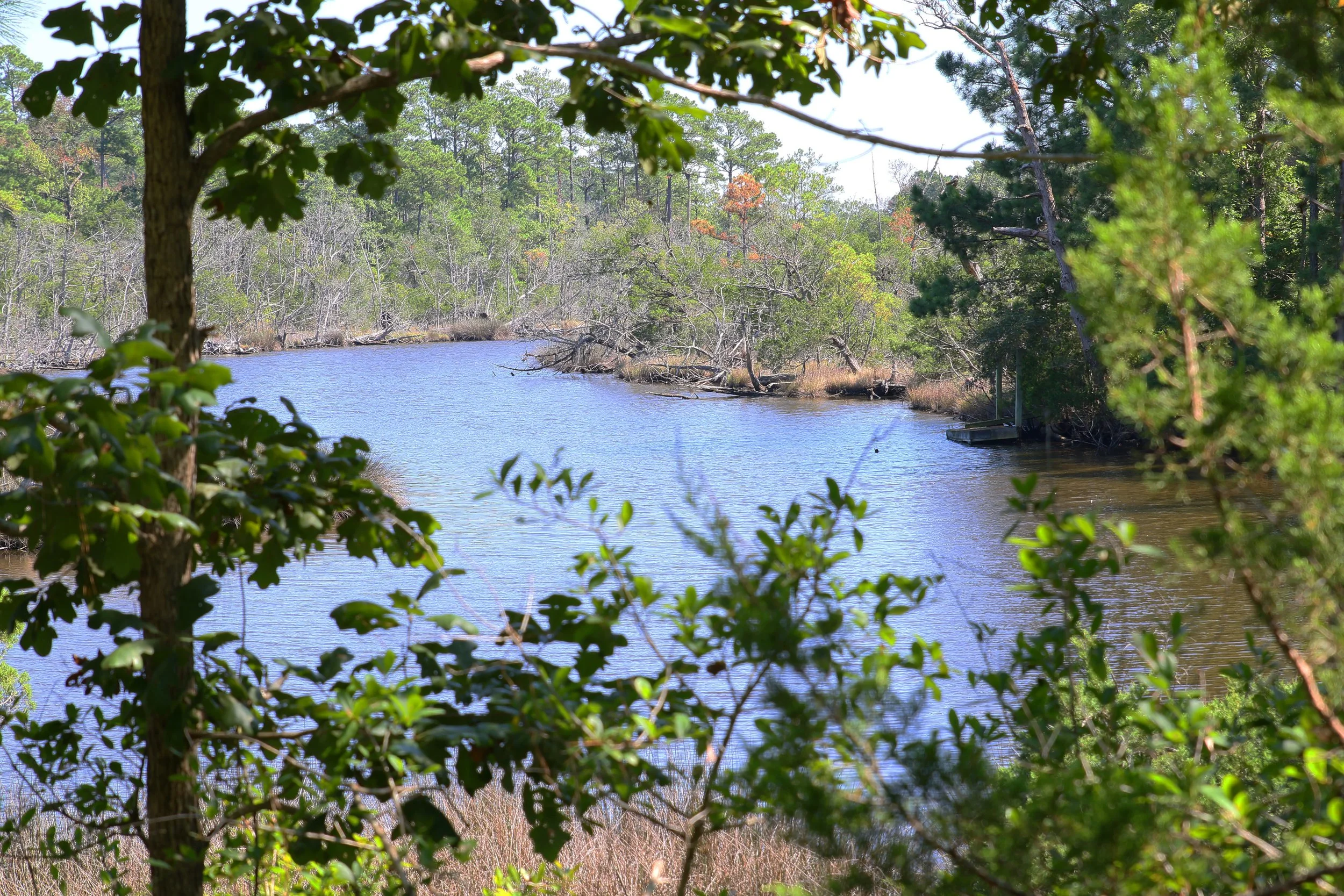
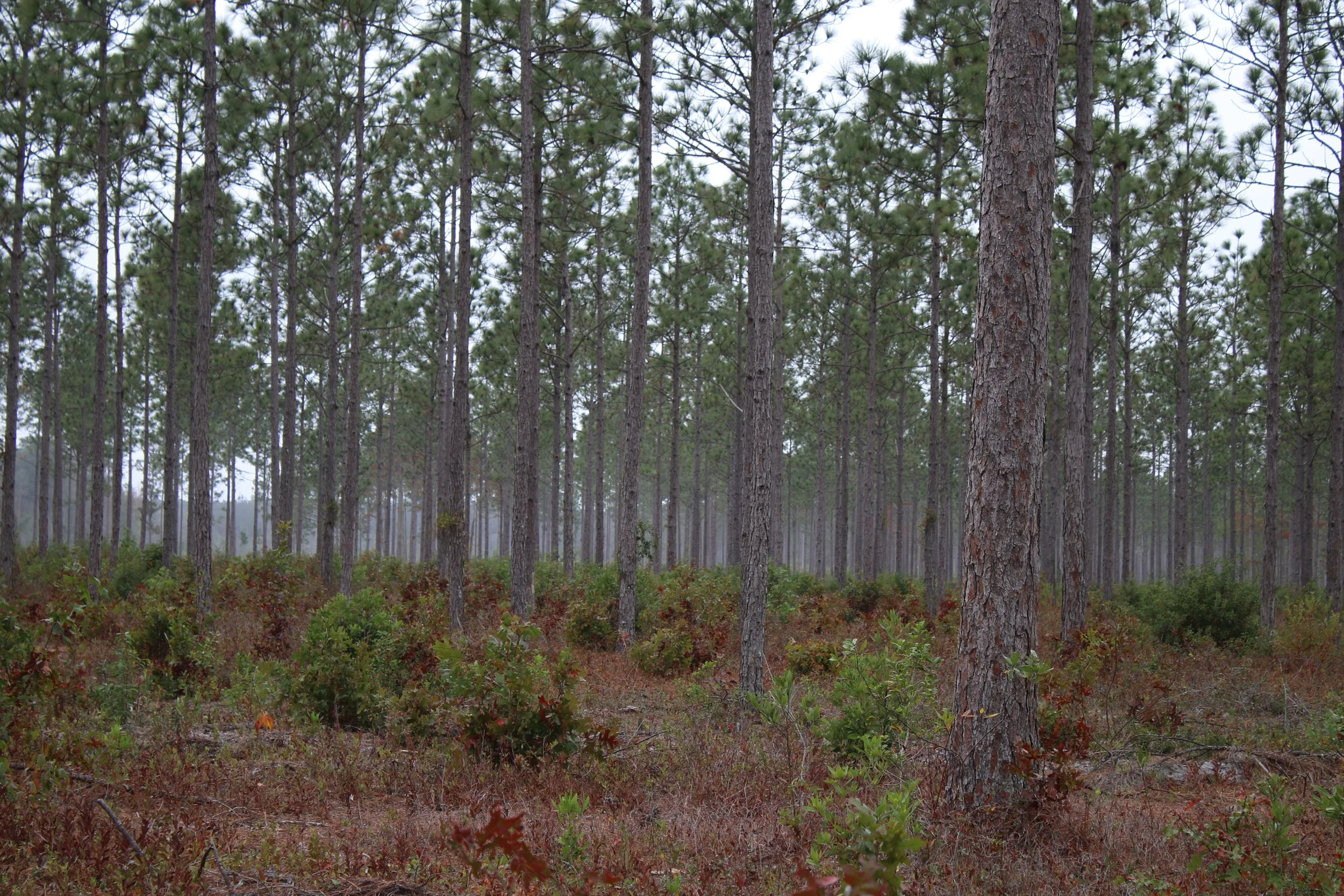
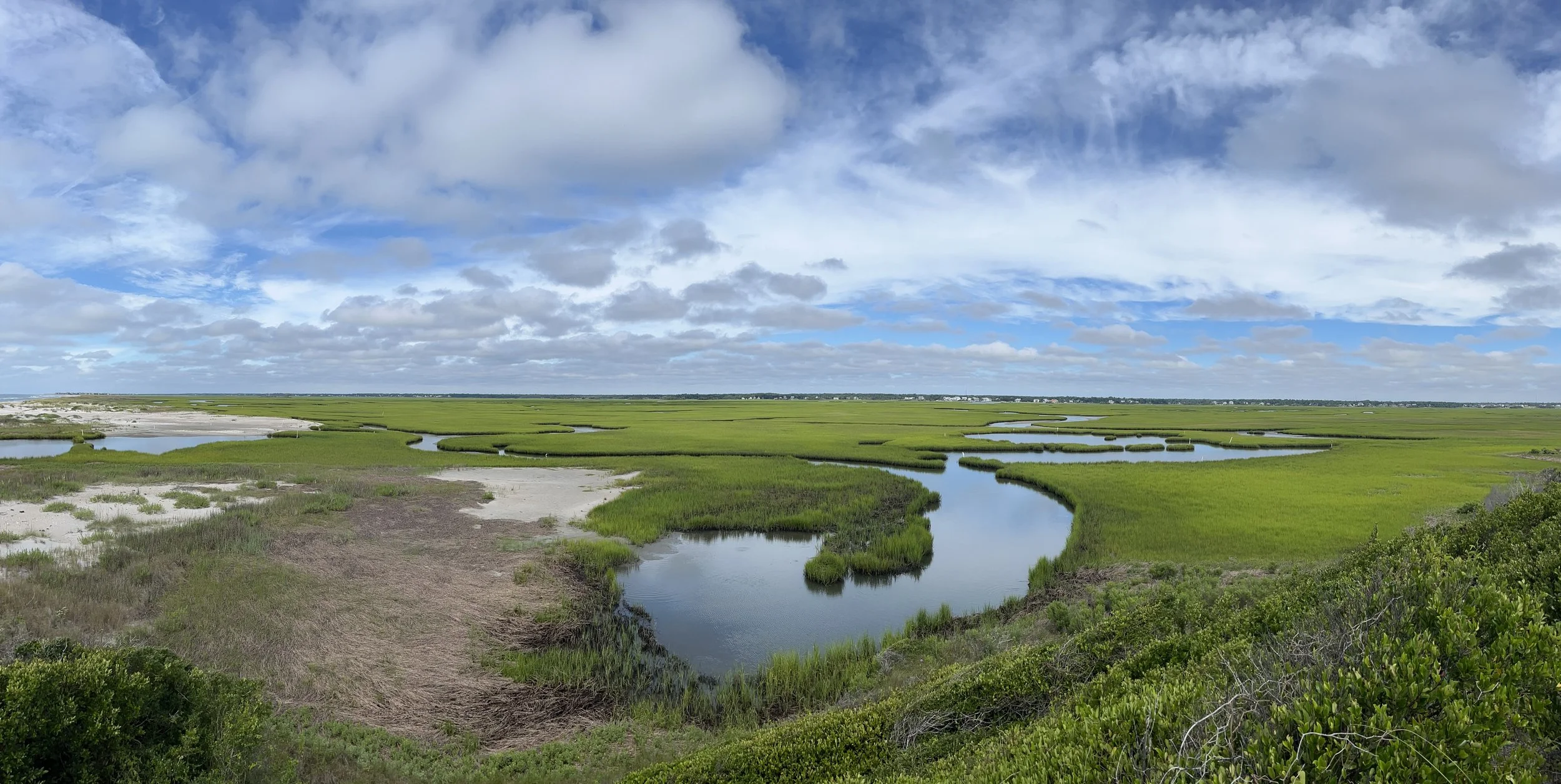
All images taken by NCCLT Staff